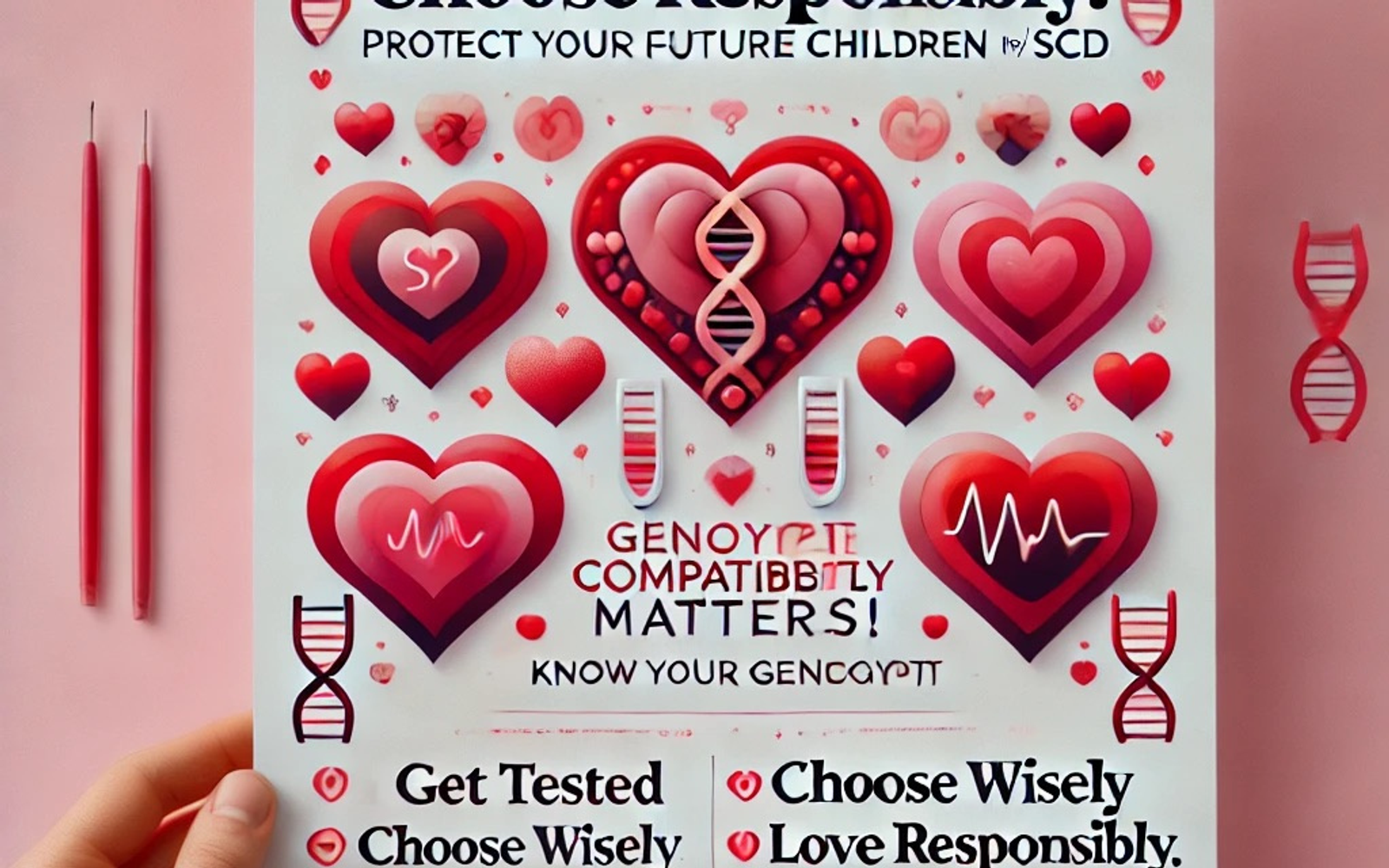
Valentine’s Day is a season of love
A time when couples express their affection through gifts, dates, and heartfelt words. But beyond the flowers and chocolates, love requires responsibility. While enjoying this season, there’s an important conversation that every couple, especially those in a serious relationship or courting, should have: genotype compatibility.
Why Is Genotype Compatibility Important?
Genotype compatibility is more than just a medical term; it’s a life-changing factor that can affect future generations. If two people with incompatible genotypes get married and have children, they risk passing on sickle cell disease (SCD) a painful and life-threatening condition that affects millions worldwide.
SCD causes red blood cells to become misshapen, leading to severe pain, frequent hospitalizations, and lifelong complications. While medical advancements have improved treatment, prevention is always better than cure.
Love vs. Reality: When Compatibility Isn’t Just About Feelings
Many couples avoid genotype discussions, assuming love will conquer all. However, ignoring genotype compatibility can lead to heartbreak, emotional distress, and lifelong struggles for future children. If two people are found to be incompatible, the painful reality is that they may have to make a difficult decision: stay together and risk having a child with sickle cell or separate for the sake of the future.
Walking away from love is never easy, but the pain of raising a child with SCD watching them suffer, go through multiple hospitalizations, and face limited life opportunities can be far more devastating.
Genotype Matching: What Should You Know?
Before committing to a lifelong relationship, it’s crucial to know your genotype and ensure compatibility:
- AA + AA = Safe (All children will be AA)
- AA + AS = Safe (But there's a chance of having AS children)
- AA + SS = Risky (All children will be AS)
- AS + AS = High Risk (25% chance of SS child, 50% chance of AS, 25% chance of AA)
- AS + SS = Very High Risk (50% chance of SS child)
- SS + SS = Extremely High Risk (All children will have sickle cell disease)
Questions Couples Should Ask Each Other
1. What is your genotype? (Have you been tested?)
2. Do you understand the risks of sickle cell disease?
3. If our genotypes are incompatible, are we willing to consider other options?
4. Would we be open to medical advice or genetic counseling?
5. How important is having biological children to us?
6. Are we prepared to adopt or explore other options if needed?
Final Thoughts: Love with Wisdom
Valentine’s Day is about celebrating love, but true love considers the future. If you’re in a serious relationship or planning marriage, have the genotype conversation early. It may be difficult, but choosing wisely today can prevent unimaginable heartbreak tomorrow.
Love should be a foundation for a healthy and happy family not a source of suffering.
Love wisely, choose responsibly.
OA Initiative.
Help us enrich the lives of sickle cell warriors across Ekiti State.