REPORT OF THE SICKLE CELL DISEASE POLICY ROUNDTABLE & SCACH FELLOWS' GRADUATION CEREMONY
Theme: Securing the Future: Pathways to Establishing Ekiti State Sickle Cell Referral Centre
Date: 28th July, 2026
Venue: The GIGMOF place, Ado Ekiti
Introduction
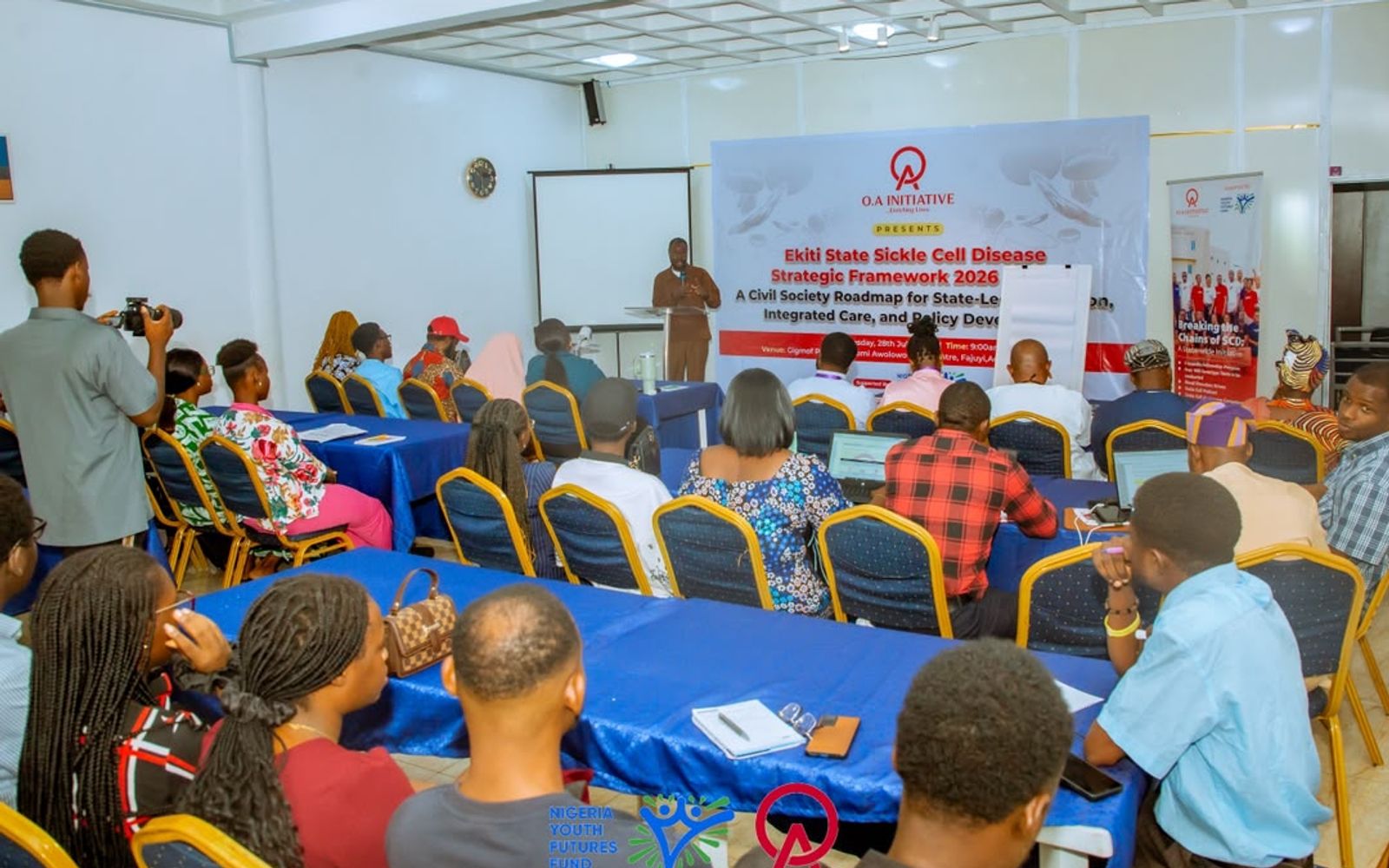
The O.A. Initiative convened the Sickle Cell Disease Policy Roundtable and SCACH Fellows' Graduation Ceremony as a strategic platform to engage key stakeholders in shaping the future of sickle cell disease (SCD) care in Ekiti State. The event brought together representatives from the Ekiti State Ministry of Health, healthcare institutions, non-governmental organizations, media houses, community actors, development partners, and sickle cell warriors to deliberate on sustainable approaches to strengthening prevention, treatment, referral systems, financing, and policy implementation. A total of 78 participants attended the event.
Proceedings
The programme commenced at 10:00 a.m.with the opening prayer and the National Anthem. Participants were formally welcomed by Mr. Oladimeji Asiwaju Deputy Executive Director of the O.A. Initiative, who appreciated the presence of all stakeholders and emphasized the importance of collaborative action in addressing the burden of sickle cell disease in Ekiti State.
Goodwill messages were delivered by representatives of the Ayeni Idowu Sickle Cell Foundation, Haven Life Foundation and the Ekiti State Ministry of Health. Speaking on behalf of the Ministry, Dr. Ibrahim Director of Public Health, commended the initiative for creating a platform that brings together policymakers, healthcare professionals, civil society organizations, and advocates to jointly chart a sustainable future for sickle cell care.
The Project Overview, highlighting the journey, key achievements, and purpose of the roundtable, was presented by Dr. Ayomide Olanipekun Executive Director of the O.A. Initiative. He reflected on the milestones achieved through the project and reiterated that the objective of the roundtable was to develop practical recommendations that would support the establishment of a dedicated Sickle Cell Referral Centre and strengthen the overall healthcare response for persons living with sickle cell disease in Ekiti State.
The keynote address was delivered by Dr. Olumide Obi, who emphasized the need for deliberate policy implementation, stronger health systems, effective stakeholder collaboration, and sustained investment in sickle cell services. He highlighted the importance of evidence-based planning, government ownership, and coordinated partnerships in improving health outcomes for people living with sickle cell disease.

Following the keynote address, participants observed a tea break which also served as an opportunity for networking and interaction among stakeholders.
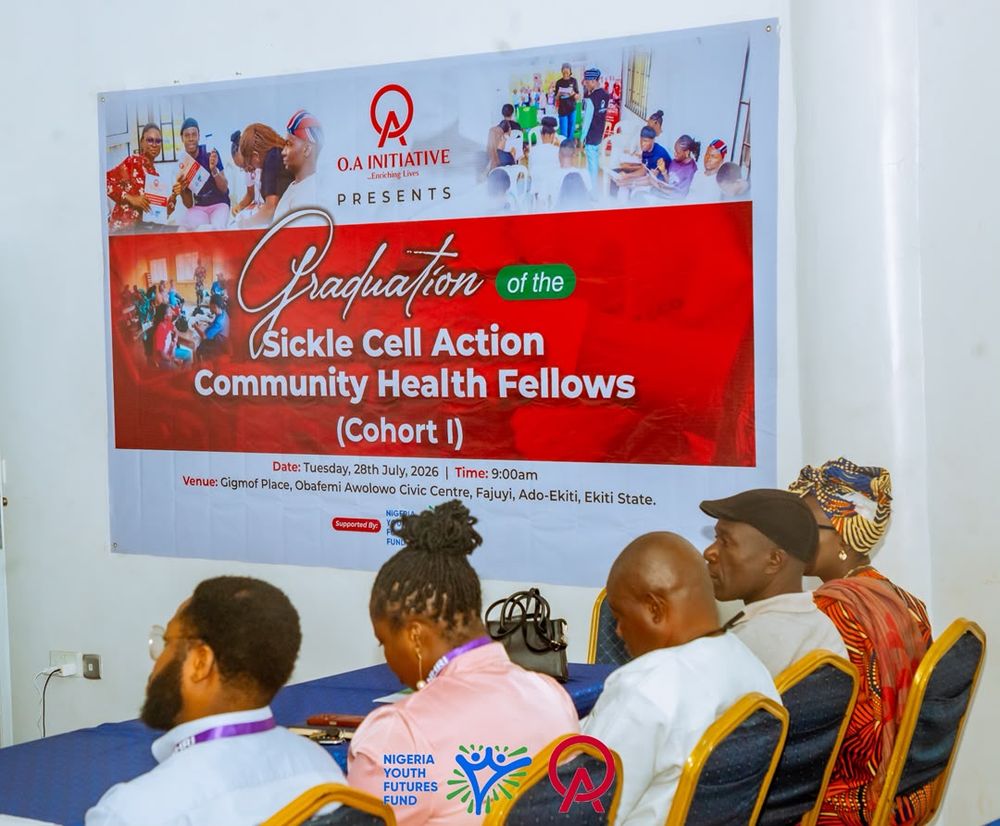
The programme proceeded with the SCACH Fellows' Graduation Ceremony, coordinated by Ayoola Oluwanifemi, SCD Project Lead. An overview of the SCACH Fellowship Programme was presented, highlighting the fellows' journey and contributions to advocacy and community engagement. Certificates were presented to the graduating fellows in recognition of their successful completion of the fellowship, after which group photographs were taken.
Participants were subsequently divided into four breakout groups to deliberate on strategic issues relating to sickle cell disease prevention, management, financing, policy implementation, and healthcare delivery. Each group presented its recommendations during the plenary session for validation and adoption.
Action Points and Recommendations
Following the group discussions and plenary presentations, the following action points and recommendations were agreed upon:
1. Develop a robust, data-driven approach to sickle cell programming by generating accurate data on disease prevalence, the number of persons living with sickle cell disease, and mortality rates to inform planning and policy decisions.
2. Conduct baseline assessments to identify prevailing cultural beliefs, myths, and misconceptions about sickle cell disease and design culturally sensitive awareness campaigns using local languages.
3. Produce and disseminate child-friendly and community-friendly educational materials to improve public understanding of sickle cell disease.
4. Establish dedicated sickle cell centres across Local Government Areas in line with the National Strategic Framework, beginning with pilot implementation in selected LGAs or senatorial districts before statewide scale-up.
5. Fast-track the establishment of a dedicated Sickle Cell Referral Centre in Ekiti State while strengthening referral systems across all levels of healthcare.
6. Develop policies and legal frameworks that discourage stigma and discrimination against persons living with sickle cell disease and collaborate with legal professionals to strengthen advocacy efforts.
7. Integrate sickle cell disease education into the school curriculum to promote early awareness and informed decision-making among young people.
8. Promote continuous research, innovation, mentorship, and public education to sustain advocacy and improve knowledge of sickle cell disease.
9. Develop standardized clinical management protocols for existing health facilities and strengthen accreditation processes through relevant regulatory and health insurance bodies.
10. Build the capacity of healthcare workers through regular training on comprehensive sickle cell disease prevention, diagnosis, management, and referral.
11. Increase state government funding for sickle cell programmes while expanding access to health insurance coverage through the National Health Insurance Authority (NHIA) and the Ekiti State Health Insurance Scheme (EKHIS).
12. Strengthen collaboration among government agencies, development partners, civil society organizations, media organizations, parents, employers, private healthcare providers, and community actors to improve advocacy and service delivery.
13. Encourage public-private partnerships to mobilize additional resources and strengthen the sustainability of sickle cell interventions.
14. Institutionalize periodic strategic reviews and annual performance audits to monitor implementation of the strategic plan and measure progress.
15. Develop a comprehensive implementation framework with clear monitoring and evaluation indicators to guide execution of the five-year strategic blueprint.
16. Establish a multi-stakeholder implementation and transition committee to coordinate implementation of the agreed recommendations in collaboration with the Ekiti State Ministry of Health.
17. Advocate for the inclusion and active participation of private hospitals within the state's sickle cell response framework to improve access to quality care.
18. Strengthen partnerships with parents, employers, educational institutions, and community leaders to promote inclusive support systems for persons living with sickle cell disease.
Conclusion
The Sickle Cell Disease Policy Roundtable successfully provided a platform for meaningful dialogue and collaboration among government representatives, healthcare professionals, development partners, civil society organizations, media practitioners, and community actors on strengthening sickle cell disease care in Ekiti State. The recommendations generated from the breakout sessions will serve as key inputs into the development of a sustainable strategic roadmap for improving prevention, treatment, referral systems, financing, and policy implementation.
The graduation of the inaugural SCACH Fellows further underscored the importance of youth leadership and community advocacy in advancing the sickle cell agenda. The event concluded with a renewed commitment from stakeholders to work collaboratively towards establishing a functional Sickle Cell Referral Centre and improving the quality of life of persons living with sickle cell disease across Ekiti State.
Help us enrich the lives of sickle cell warriors across Ekiti State.